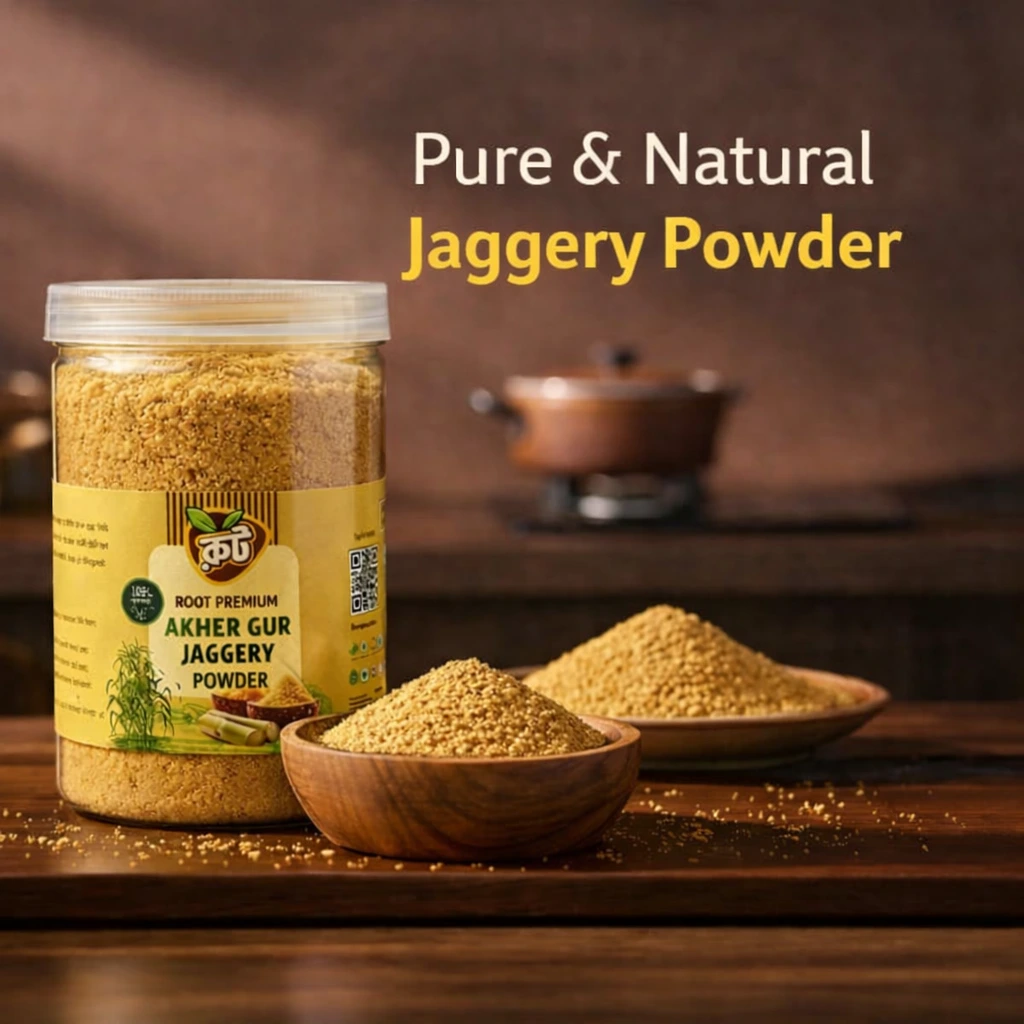
White sugar has been part of our daily food habits for generations. We add it to tea, coffee, desserts, baked foods and many packaged products. But as people become more conscious about highly refined ingredients, another sweetener is receiving growing attention: jaggery powder.
This raises an important question: Is jaggery powder better than sugar?
Jaggery powder is generally less refined and may retain small amounts of naturally occurring minerals that are largely removed from white sugar. However, jaggery is still a form of added sugar. It contains calories and carbohydrates and can raise blood glucose levels.
So, the real answer is not as simple as saying that jaggery is healthy and sugar is unhealthy. This guide provides a balanced comparison of jaggery powder vs white sugar, including their processing, nutrition, calories, blood-sugar effects, weight-management role and everyday uses.
Quick Answer
Jaggery powder may be a better choice than refined white sugar for people who prefer a less-refined sweetener with a richer flavour. However, both are concentrated sources of sugar and should be consumed in moderation. Jaggery is not sugar-free, low-calorie or automatically suitable for people with diabetes.
What Is Jaggery Powder?
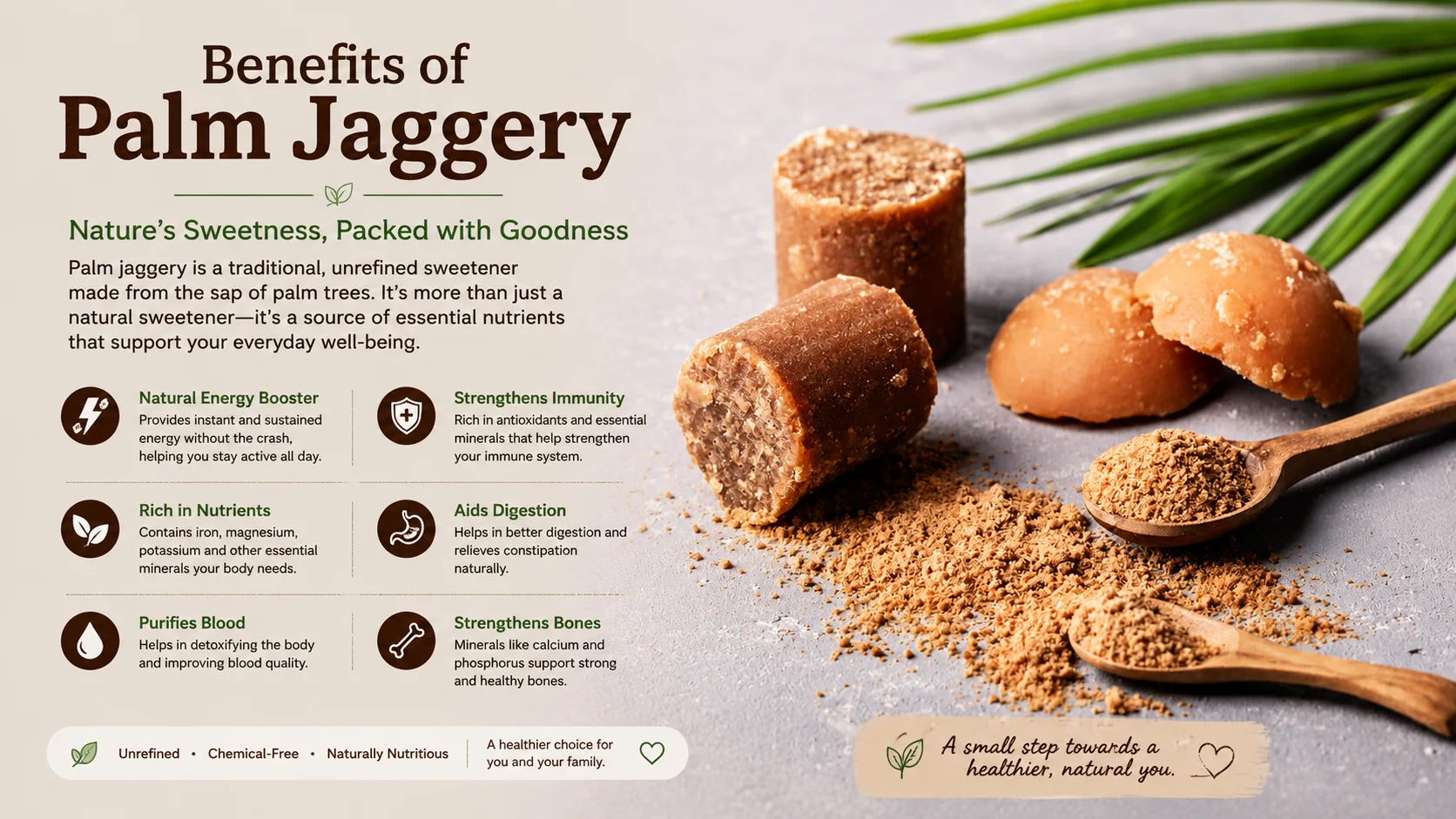
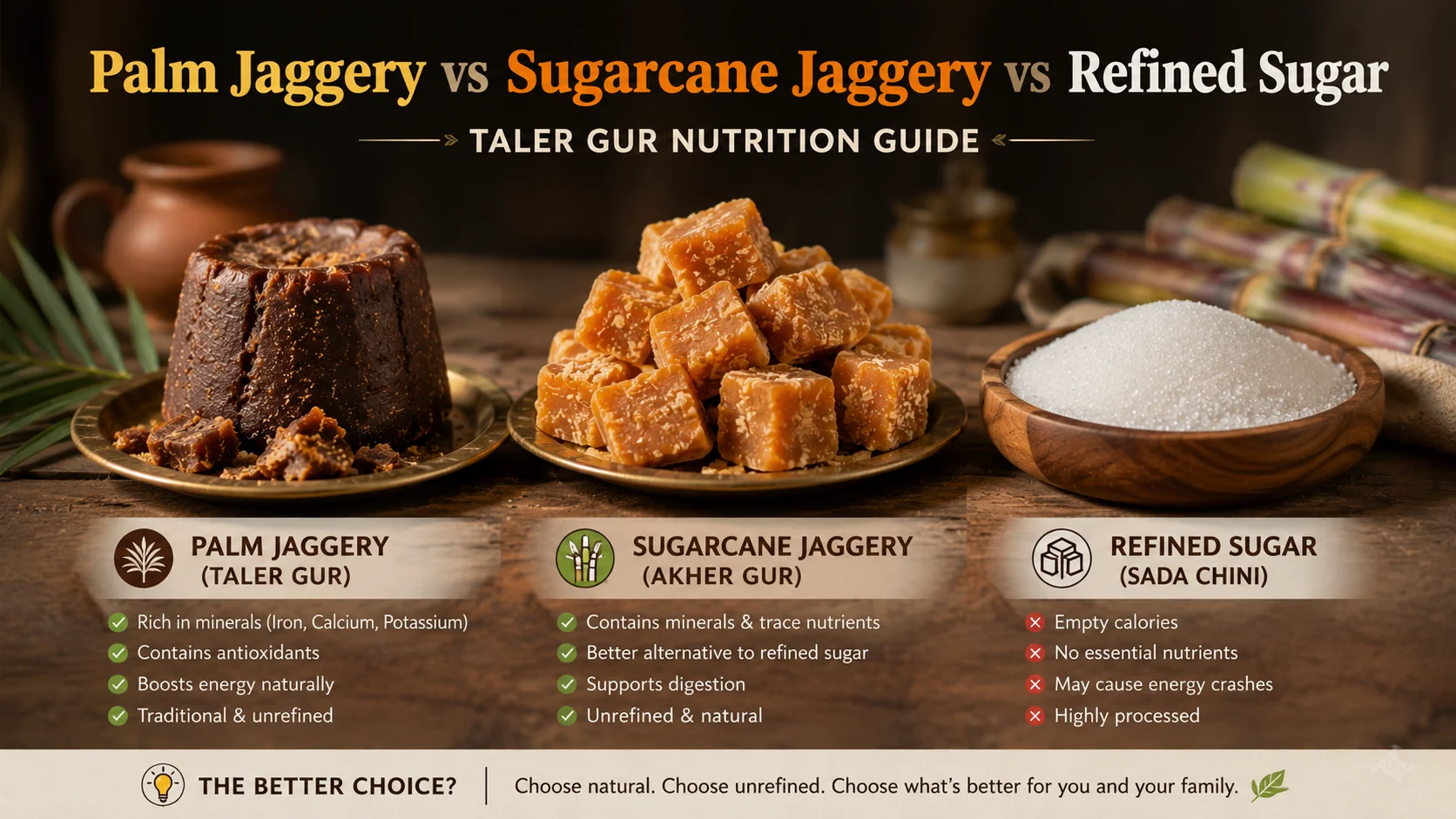
Jaggery powder is a traditional sweetener commonly made by concentrating sugarcane juice. Some varieties may also be produced from date palm or other palm sap.
During production, the extracted juice is filtered and heated to remove water. As it becomes concentrated, it develops a thick consistency, deep colour and distinctive caramel-like flavour. The concentrated jaggery is then cooled, dried and converted into blocks, granules or powder.
Because jaggery is not refined in the same way as white sugar, some of the naturally occurring molasses and plant-derived components remain in the final product. Its exact colour, flavour, texture and nutritional composition can vary depending on:
- The source of the juice or sap
- The quality of the raw ingredients
- The heating and filtration process
- The amount of moisture present
- Whether additives or processing agents are used
- Storage and packaging conditions
What Is White Sugar?
White sugar, also known as refined sugar or table sugar, is commonly produced from sugarcane or sugar beet. The extracted juice goes through several stages of purification, clarification, crystallisation and refining.
These processes remove most of the molasses, colour, minerals and other components, leaving white crystals made almost entirely of sucrose.
White sugar has a neutral sweetness, predictable texture and long shelf life. This makes it convenient for tea, coffee, commercial food production and baking. Nutritionally, however, it mainly provides carbohydrates and calories with very few naturally occurring micronutrients.
Jaggery Powder vs Sugar: What Is the Main Difference?
The main difference between jaggery powder and white sugar is the degree of processing.
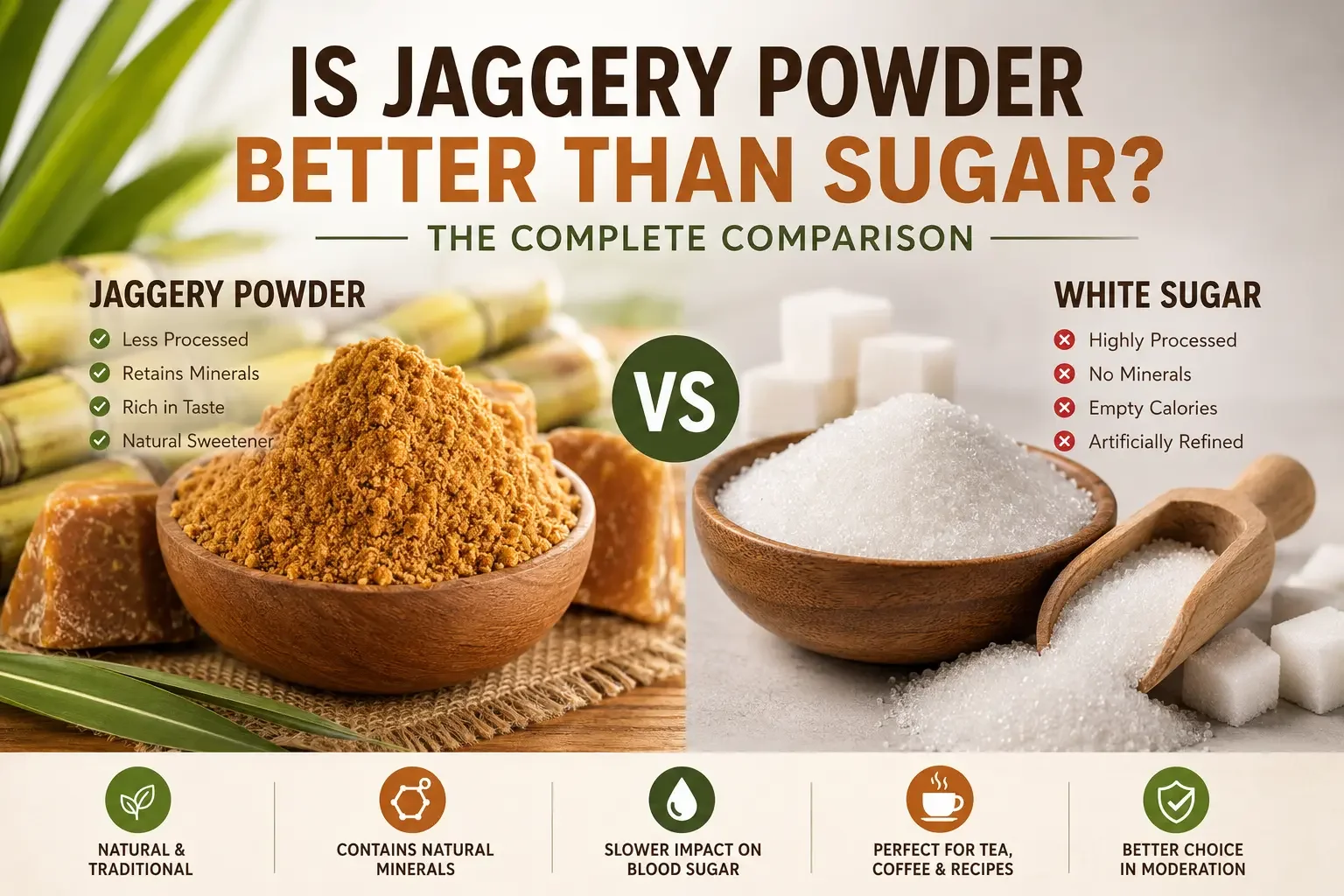
Jaggery powder is generally less refined and retains some molasses. White sugar undergoes further processing to remove colour, molasses and most non-sugar components.
| Comparison | Jaggery Powder | White Sugar |
|---|---|---|
| Source | Usually sugarcane juice or palm sap | Sugarcane or sugar beet |
| Processing | Generally less refined | Highly refined |
| Main carbohydrate | Primarily sugars, including sucrose | Almost entirely sucrose |
| Minerals | May contain small and variable amounts | Very little |
| Calories | High | High |
| Flavour | Rich, earthy and caramel-like | Clean and neutral sweetness |
| Colour | Golden brown to dark brown | White |
| Effect on blood glucose | Can raise blood glucose | Can raise blood glucose |
| Best suited for | Traditional foods and richer flavour | Neutral sweetness and precise baking |
Is Jaggery Powder Healthier Than Sugar?
Jaggery powder has one nutritional advantage over refined white sugar: it may retain small amounts of minerals and other components from the original sugarcane juice or palm sap.
Depending on the source and production method, jaggery may contain small amounts of minerals such as:
- Iron
- Potassium
- Calcium
- Magnesium
- Phosphorus
White sugar contains very little of these nutrients because most are removed during refining.
However, the mineral content of jaggery varies significantly between products. You would also need to consume a relatively large amount of jaggery to obtain meaningful quantities of some nutrients. That would increase your intake of sugar and calories.
For this reason, jaggery should not be treated as a replacement for nutrient-rich foods such as vegetables, fruits, lentils, dairy products, fish, meat, nuts and seeds.
Important: Jaggery may offer more trace nutrients than white sugar, but it remains a sweetener rather than a health supplement.
Does Jaggery Have Fewer Calories Than Sugar?
Jaggery and white sugar both provide a substantial number of calories. Their exact calorie content may differ slightly because jaggery can contain moisture, minerals and other non-sugar components.
In practical serving sizes, however, the calorie difference is usually not large enough to make jaggery a low-calorie alternative.
Replacing one spoonful of white sugar with the same amount of jaggery does not automatically reduce your calorie intake. Portion size still matters.
Is Jaggery Powder Better Than Sugar for Weight Loss?
Jaggery is often promoted as a natural sweetener for weight loss. But simply replacing white sugar with jaggery is unlikely to cause meaningful weight loss because both provide sugar and calories.
Healthy weight management depends more on your overall dietary pattern, including:
- Total calorie intake
- Portion sizes
- Protein consumption
- Dietary fibre
- Physical activity
- Sleep quality
- Stress management
- Consistency over time
Jaggery may still be useful for someone trying to improve their eating habits. Its stronger taste may allow some people to feel satisfied with a smaller amount. But this depends on how it is used.
Adding large quantities of jaggery to tea, desserts or snacks can still make weight management difficult.
Practical advice for weight management
Instead of only changing the type of sweetener, gradually reduce the total amount you use. For example, someone who normally adds two teaspoons of sugar to tea can slowly reduce the quantity, whether using sugar or jaggery.
Does Jaggery Raise Blood Sugar?
Yes. Jaggery contains digestible sugars and can raise blood glucose after consumption.
The fact that jaggery is natural, traditional or less refined does not make it free from sugar. It should still be counted as part of a person's overall intake of added or free sugars.
The blood-glucose response can depend on:
- The amount consumed
- Whether it is eaten alone or with a meal
- The protein, fat and fibre in the meal
- The person's metabolism and health condition
- The composition of the individual jaggery product
Can People With Diabetes Eat Jaggery?
People with diabetes should not assume that jaggery is a safe or unrestricted substitute for white sugar.
Jaggery can raise blood glucose and may need to be limited or avoided depending on the person's meal plan, medication, glucose control and medical advice.
There is no universal daily amount of jaggery that is safe for every person with diabetes. A serving that works for one person may cause an undesirable glucose response in another.
Anyone with diabetes, prediabetes, insulin resistance or another condition affecting blood glucose should speak with a qualified doctor or registered dietitian before regularly using jaggery as a sweetener.
Diabetes warning: “Natural” does not mean “blood-sugar free.” Do not use jaggery as a treatment for diabetes or as an unrestricted diabetic sweetener.
Is the Glycemic Index of Jaggery Lower Than Sugar?
Online articles often claim that jaggery has a much lower glycemic index than white sugar. This claim should be treated carefully.
Jaggery products are not identical. Their sugar composition, moisture and production methods can vary, and reliable glycemic-index data may not be available for every variety.
What matters most for everyday health decisions is that both jaggery and white sugar contain rapidly digestible carbohydrates and can increase blood glucose. People should not rely on a supposed glycemic-index advantage to consume jaggery freely.
Is Jaggery Better Than Brown Sugar?
Brown sugar is usually refined sugar combined with molasses or sugar crystals that retain some molasses. Jaggery, in comparison, is generally produced by concentrating sugarcane juice or palm sap without refining it into white sugar first.
Both have a brown colour and richer flavour than white sugar, but they are not the same product.
- Jaggery: Usually less refined, with a deeper and more traditional flavour.
- Brown sugar: Usually more uniform in texture and useful for baking.
- White sugar: Most refined and neutral in flavour.
All three remain concentrated sweeteners, so portion control is important.
Potential Advantages of Choosing Jaggery Powder
1. It is generally less refined
Many people prefer jaggery because it undergoes fewer refining steps than white sugar. This makes it attractive to consumers looking for more traditional or minimally refined ingredients.
2. It offers a richer flavour
Jaggery powder has an earthy, caramel-like taste. This flavour can add depth to tea, milk, desserts, sauces, baking and traditional recipes.
3. It may contain small amounts of minerals
Unlike refined sugar, jaggery can retain small amounts of minerals from its raw ingredients. The amount varies and should not be exaggerated.
4. It works well in traditional recipes
Jaggery is commonly used in pitha, payesh, semai, halwa, laddoo and various regional drinks and desserts.
5. Its stronger taste may encourage smaller portions
Some people find the deeper flavour of jaggery more satisfying than the neutral sweetness of white sugar. This may help them use less, although it is not guaranteed.
What Jaggery Powder Cannot Do
Balanced nutrition information is important because jaggery is sometimes promoted with unrealistic health claims.
Jaggery powder should not be presented as something that can:
- Cure diabetes
- Cause weight loss by itself
- Detoxify the body
- Treat anaemia without medical care
- Prevent every sugar-related health problem
- Be consumed without limits
Choosing jaggery instead of white sugar may fit a less-refined eating preference, but the quantity consumed remains more important than marketing claims.
How Much Jaggery Should You Eat Daily?
There is no single recommended daily amount that applies to everyone. Your appropriate intake depends on your age, overall diet, energy needs, activity level and medical condition.
The World Health Organization recommends keeping free sugars below 10% of total daily energy intake and suggests that reducing intake below 5% may provide additional health benefits.
Free sugars include sugars added to foods and drinks, along with sugars naturally present in honey, syrups and fruit-juice concentrates. Jaggery used as a sweetener should therefore be considered within your total free-sugar intake.
The practical lesson is simple: use jaggery to add flavour and sweetness, not as an unlimited health food.
How to Use Jaggery Powder Instead of Sugar
Jaggery powder can replace white sugar in many foods and drinks. However, its richer flavour and moisture content may affect the final result.
Tea and coffee
Add a small amount after preparing the drink and adjust according to taste. Jaggery may create a deeper flavour than white sugar.
Warm milk
Jaggery powder can add a caramel-like sweetness to warm milk. Start with a small serving instead of making the drink overly sweet.
Oatmeal and breakfast bowls
A light sprinkle of jaggery can be paired with oats, nuts, seeds or fruit. Remember that fruit may already provide natural sweetness.
Baking
Jaggery can be used in cakes, cookies and breads. Because it behaves differently from refined sugar, the texture, colour and moisture of the recipe may change.
Traditional desserts
Its flavour works particularly well in payesh, pitha, halwa, semai and other traditional dishes.
Sauces and marinades
A small amount can balance spicy, salty or sour flavours in chutneys, marinades and sauces.
How to Choose Good-Quality Jaggery Powder
Not every jaggery product has the same quality. Consider the following points before buying:
- Read the ingredient list.
- Choose a product without unnecessary colours or flavours.
- Check whether the packaging is properly sealed.
- Look for clear manufacturing and expiry information.
- Check for unusual smells, excessive moisture or visible contamination.
- Buy from a trusted producer or seller.
- Follow the storage instructions on the package.
Colour alone cannot confirm purity. Jaggery can naturally vary from light golden brown to dark brown depending on the raw material and production process.
How to Store Jaggery Powder
Jaggery powder can absorb moisture from the air, which may make it sticky or cause clumping. Proper storage helps preserve its quality.
- Keep it in a clean, dry, airtight container.
- Store it away from direct sunlight and heat.
- Always use a dry spoon.
- Do not allow water to enter the container.
- Follow any specific instructions provided on the product label.
Jaggery Powder or White Sugar: Which Should You Choose?
Choose jaggery powder when you want:
- A less-refined sweetener
- A deeper caramel-like flavour
- A traditional ingredient
- Small amounts of naturally retained minerals
White sugar may still be preferred when you need:
- A neutral flavour
- A lighter colour
- Consistent crystal size
- Predictable results in certain baking recipes
From a health perspective, the most important step is not merely changing the name of the sweetener. It is reducing excessive sweetness and controlling total added-sugar intake.
Frequently Asked Questions
Is jaggery powder better than white sugar?
Jaggery powder is generally less refined and may contain small amounts of minerals that white sugar lacks. However, both contain sugar and calories, so jaggery should still be used moderately.
Can jaggery powder replace sugar completely?
Jaggery powder can replace white sugar in many drinks, desserts and recipes. Its stronger flavour, colour and moisture may change the final taste and texture.
Is jaggery powder good for weight loss?
Jaggery does not directly cause weight loss. It has calories similar to other concentrated sweeteners. Weight loss depends mainly on total calorie intake, nutrition, physical activity and long-term habits.
Can people with diabetes consume jaggery?
Jaggery can raise blood glucose and is not an unrestricted diabetic sweetener. People with diabetes should follow advice from their doctor or registered dietitian.
Does jaggery contain iron?
Some jaggery products contain small amounts of iron, but the amount can vary. Jaggery should not be relied upon as the primary treatment or food source for iron deficiency.
Is jaggery sugar-free?
No. Jaggery is a concentrated sweetener that contains naturally occurring sugars, including sucrose.
Is jaggery lower in calories than white sugar?
The calorie content can differ slightly, but both are high-calorie sweeteners. The difference is usually not large enough to make jaggery a low-calorie food.
Can children eat jaggery powder?
Children may consume small amounts as part of an age-appropriate balanced diet, but jaggery is still a free sugar. Parents should avoid making children's foods and drinks excessively sweet.
Can jaggery be added to tea and coffee?
Yes. Jaggery powder can be added to tea and coffee, where it creates a deeper, caramel-like taste. Begin with a small amount and adjust according to preference.
Is darker jaggery always healthier?
No. Colour depends on the raw material, heating, moisture and processing method. Darker colour alone does not prove that a product is purer or healthier.
Final Verdict: Is Jaggery Powder Better Than Sugar?
Jaggery powder can be considered a better option than refined white sugar for people who prefer a less-refined sweetener with a richer taste and small amounts of naturally retained minerals.
But the difference should not be exaggerated. Jaggery remains a concentrated source of sugar and calories. It can raise blood glucose, does not automatically support weight loss and is not an unrestricted sweetener for people with diabetes.
What this really means is that replacing white sugar with jaggery may be a useful food-quality choice, but reducing your total intake of added sweetness is the more important long-term health decision.
Use jaggery powder for its traditional flavour and less-refined character, keep portions sensible and build the rest of your diet around nutrient-rich whole foods.
References and Further Reading
- World Health Organization: Guideline on Sugars Intake for Adults and Children
- World Health Organization: Recommendations for Reducing Free-Sugar Intake
- U.S. Food and Drug Administration: Added Sugars on the Nutrition Facts Label
This article is intended for general educational purposes and is not a substitute for personalised medical or nutritional advice.